
 Posted by
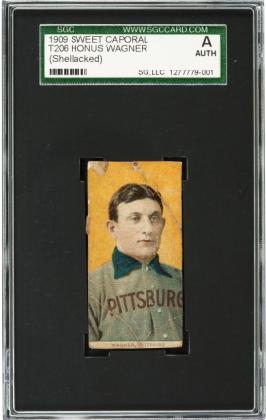
Honus Wagner
The Honus Wagner card is one of approximately 60 that exist (although the authenticity of many are subject of debate). This particular card which has been authenticated by SGC was donated to Nuns at the School Sisters of Notre Dame, in Baltimore Maryland. Before it was donated, no one even knew of its existence.
The same Honus Wagner baseball card in near-mint-condition sold for $2.8 million back in 2007. It was the highest price ever paid for a sports card. The card was found in the safety deposit box of the man who donated it, along with a note that read, “Although damaged, the value of this baseball card should increase exponentially throughout the 21st century!”
Honus Wagner, whose real name was Johannes Peter Wagner lived from 1874 until 1955. The reason the card is so valuable is because Wagner insisted that the cards stop being produced and distributed by the American Tobacco Company. There are two stories to why he insisted on this. The first claims that Honus Wagner did not want children to purchase tobacco products in order to obtain his card, and the other claims that he believed he should receive greater compensation for his own baseball card. It is believed that less than 200 cards actually made it to the public. Out of those 200, many did not survive the past 100 years.
